

[Three Hundred Animals Contents] IS found throughout India, Guinea, and the Philippine islands, and famous for producing the drug called musk or civet. He is kept for the sake of this perfume, and fed with pap, made of millet, with a little fish or flesh boiled with it. The musk scraped from the male … Continue reading The Civet Cat, p.58.
Category: Scottish History
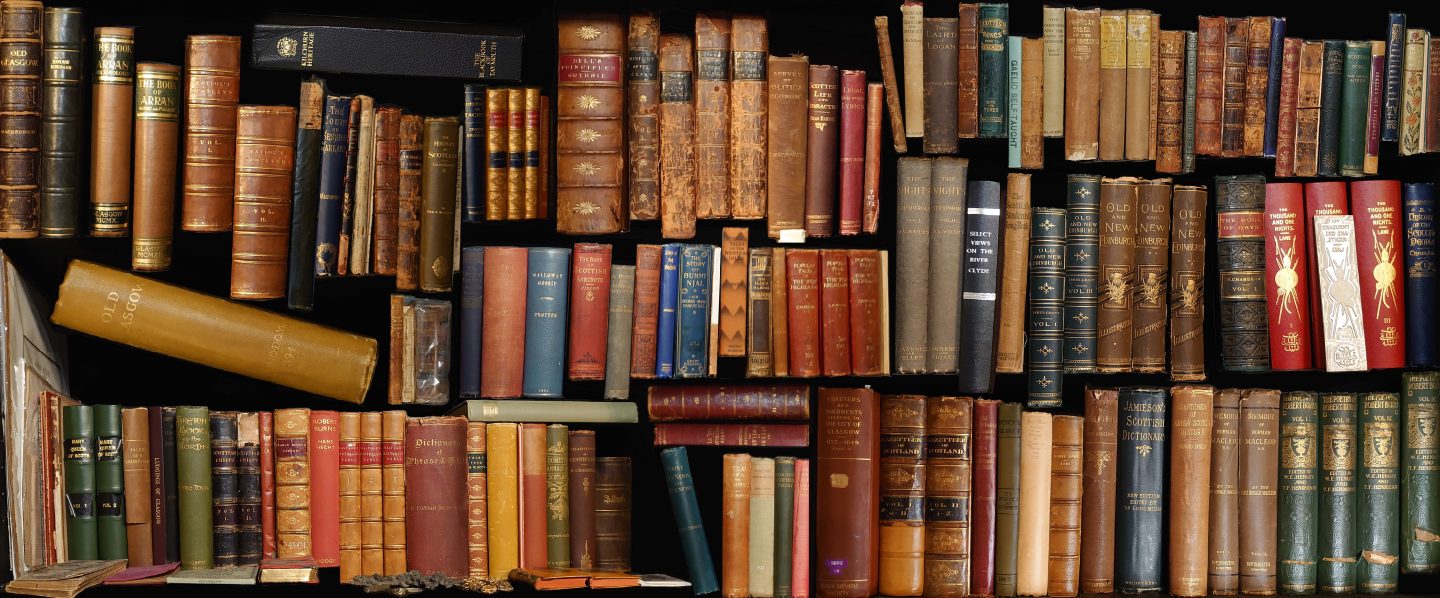
Pre-1900 book collection comprising of Scottish history, literature, poetry, lithographs, newspapers, photographs, &c.

The Cat, pp.57-58.
[Three Hundred Animals Contents] MIGHT be called the domestic tiger or leopard; he looks as a species of those wild beasts, brought to and degraded by, domesticity; however tame a Cat may be individually, the race has not yet lost its original habits; and ferocity, cunning, and treachery, still characterize the Cat, even on … Continue reading The Cat, pp.57-58.
Share this:

The Musk-Rat, pp.56-57.
[Three Hundred Animals Contents] IS a native of Canada, and resembles the beaver in many of the habits of life. He has a fine musky scent, and builds his holes in marshes, and by the water-side, with two or three ways to get in or go out, and several distinct apartments in the manner … Continue reading The Musk-Rat, pp.56-57.
Share this:

The Water Rat, p.56.
[Three Hundred Animals Contents] DIFFERS very little from the Land Rat, and inhabits the banks of rivers and ponds, where he digs holes always above the water mark, and feeds on fish, frogs and insects. The Norway Rat, which has now almost destroyed the aborigines ones, was first known in England about sixty years … Continue reading The Water Rat, p.56.
Share this:

The Rat, p.55.
[Three Hundred Animals Contents] IS about four times as big as a mouse, but of a dusky colour, with white under the belly; his head is longer, his neck shorter and his eyes comparatively bigger This animal is so attached to our common dwellings that it is almost impossible to destroy the breed when … Continue reading The Rat, p.55.
Share this:

The Mouse, pp.54-55.
[Three Hundred Animals Contents] IS a lively, active animal, and the most timid in nature, except the hare, and a few other defenceless species. Although timid, he eats in the trap as soon as he is caught; yet he never can be thoroughly tamed, nor does he betray any affection for his assiduous keeper. … Continue reading The Mouse, pp.54-55.
Share this:

The Hippopotamus, or River-Horse, p.54.
[Three Hundred Animals Contents] LIVES as well on land as in water, and yields in size to none but the elephant; he weighs sometimes between fifteen and sixteen hundred pounds. His skin is very sleek, and covered with short and soft hair of a mouse colour. The head is flattish on the top, his … Continue reading The Hippopotamus, or River-Horse, p.54.
Share this:

The Beaver, p.55.
[Three Hundred Animals Contents] IS a most industrious creature, and well known for his skill in building timber apartments for him and his family, on the banks of narrow rivers, where he watches the passing fish, which he brings out of the water, to devour it at pleasure. Their work consists in cutting a … Continue reading The Beaver, p.55.
Share this:

The Otter, p.52.
[Three Hundred Animals Contents] IS an amphibious animal, and pursues his prey much swifter in the water than on land. He is less than a beaver, and resembles him in most parts, except the tail. He is of a brown chesnut colour; the tail is short and like that of some dogs. Though he … Continue reading The Otter, p.52.
Share this:

The Greyhound, pp.51-52.
[Three Hundred Animals Contents] HAS a long body, and is of an elegant shape; his head is neat and sharp, with a full eye, a good mouth, sharp and very white teeth; his tail is long and curls round above his hind part. He courses more by sight than by scent, and is said … Continue reading The Greyhound, pp.51-52.
Share this:

The Bull Dog, p.51.
[Three Hundred Animals Contents] IS much less than the mastiff, but not inferior in fierceness. His short neck adds to his strength. Those of a brindled colour are accounted the best of the kind; they will run at and seize the fiercest bull without barking, making directly at his head, some times catch hold … Continue reading The Bull Dog, p.51.
Share this:

The Mastiff Dog, p.50.
[Three Hundred Animals Contents] IS the largest of the whole species; is a strong and fierce animal; has short pendant ears and a large head, great and thick lips hanging on each side, and a noble countenance; he is a faithful guardian, and a powerful defender of the house. Hark! hark! the trusty guardian … Continue reading The Mastiff Dog, p.50.
Share this:

The Water Spaniel, pp.49-50.
[Three Hundred Animals Contents] IS excellent for hunting otters, wild ducks and other games, whose retreat is among the rushes and reeds which cover the banks of rivers, the fens, and the ponds. He is very sagacious, and perhaps the most docile and tractable of all the canine tribes. The Newfoundland Dogs are of … Continue reading The Water Spaniel, pp.49-50.
Share this:

The Spaniel, pp.48-49.
[Three Hundred Animals Contents] HAS received from nature a very keen smell, good understanding and uncommon docility. He may be taught several tricks, as fetching, carrying, diving, and the like. The Land Spaniel is used in setting for partridges, pheasants, quails, &c. His steadiness in the field, his patience in keeping the bird at … Continue reading The Spaniel, pp.48-49.
Share this:

The Bloodhound, p.48.
[Three Hundred Animals Contents] IS larger than the beagle or any other hunting-dog. He is of the colour of other hounds, being red and brown; he has long ears, and seldom barks except in hunting, and then will follow his game through woods and thickets, and never leaves until he catches and kills it. … Continue reading The Bloodhound, p.48.
Share this:

The Mole, p.47.
[Three Hundred Animals Contents] IS about the bigness of a common rat; his snout resembles that of a hog, and his feet are somewhat like those of the bear, but turned backward, and armed with five strong toes that have sharp nails; the ears of the Mole are without outside shells, and consist in … Continue reading The Mole, p.47.
Share this:

The Rabbit, pp.46-47.
[Three Hundred Animals Contents] IS not unlike the hare; his flesh is white, and good, but not so luscious; his head, ears, and tail are shorter than the hare’s. The colour of the wild rabbit is constantly the same; but we have domestic ones of nearly every colour. The female begins to breed when … Continue reading The Rabbit, pp.46-47.
Share this:

The Hare, pp.45-46.
[Three Hundred Animals Contents] THIS small quadruped is well known on our table as affording a delicious meat to the palate. His swiftness cannot save him from the search of his enemies, among whom man is the most inveterate. Unarmed and fearful, the Hare sleeps with open eyes, if he sleeps at all, and … Continue reading The Hare, pp.45-46.
Share this:

The Cameleopard, or Giraff, pp.44-45.
[Three Hundred Animals Contents] HERE Nature seems to have forgotten her general rules of symmetry, in giving to this extraordinary quadruped, a small head with a large body, and fore feet much longer than the hinder ones, without letting us into the secret of her reasons for composing such a shape. This curious animal … Continue reading The Cameleopard, or Giraff, pp.44-45.
Share this:

The Bison, or Wild Ox, pp.43-44.
[Three Hundred Animals Contents] IS bred chiefly in the northern parts of the world, viz. Muscovy, Scythia, &c. He is as big as a bull or ox, being maned about the back and neck, like a lion, and his hair hanging down under his chin, or nether lip, like a large beard. He has … Continue reading The Bison, or Wild Ox, pp.43-44.
Share this:

The Dromedary, pp.42-43.
[Three Hundred Animals Contents] AN animal of the Camel kind, of less stature, but much swifter, having but one hard bunch on his back; like the camel, he chews the cud. He is covered with soft, short hair, except on the head, throat and top of the neck, where it is longer. His upper … Continue reading The Dromedary, pp.42-43.
Share this:

The Camel, pp.41-42.
[Three Hundred Animals Contents] IS a native of Asia, and is generally of a brown colour. He is one of the most useful quadrupeds in oriental countries; his docility and strength, his sobriety, and swiftness on the sands of Arabia, Lybia and Egypt, make him a most valuable acquisition to the inhabitants of those places. … Continue reading The Camel, pp.41-42.
Share this:

The Badger, pp.40-41.
[Three Hundred Animals Contents] INHABITS most parts of the world. The length of his body is about two feet six inches from the nose to the insertion of the tail, which is black like the throat, breast, and belly; the hair of the other part of the body is long and rough, of a yellowish … Continue reading The Badger, pp.40-41.
Share this:

The Hedge-Hog, p.40.
[Three Hundred Animals Contents] IS somewhat like a porcupine in miniature, and, in shape, resembles the animal from which he derives his name; he is covered all over with strong and sharp spines or prickles, which he erects when irritated. He is no more than ten inches in length, and by rolling himself in the … Continue reading The Hedge-Hog, p.40.
Share this:

The Porcupine, p.39.
[Three Hundred Animals Contents] GROWS to the height of about two feet and a half, and his body is covered with hair and sharp quills, from ten to fourteen inches long, and bent backwards. When the animal is irritated, they stand erect, but it is a folly to believe and nonsense to repeat after ill-informed … Continue reading The Porcupine, p.39.
Share this:

The Antelope, or Gazell, pp.38-39.
[Three Hundred Animals Contents] IS between the goat and the deer kind. Swiftness and elegance of shape this animal possesses to a considerable degree, and inhabits the temperate zone of Asia and Africa. He has horns like the deer, but like the goat he never sheds them; these horns are smooth, long, and annulated. The … Continue reading The Antelope, or Gazell, pp.38-39.
Share this:

The Hyæna, pp.37-38.
[Three Hundred Animals Contents] IS the most savage, fierce, cruel, and untractable of all quadrupeds; he appears as if always in a rage. He is an animal of the dog kind, and resembles the wolf in his shape; he is covered with long, coarse, and rough ash-coloured hair, and marked with long black stripes, from … Continue reading The Hyæna, pp.37-38.
Share this:

The Great-Eared Monkey, p.37.
[Three Hundred Animals Contents] HAS large, erect, square ears, and a swarthy flesh-coloured naked face; he is somewhat larger than the common squirrel, and his hair is soft, thick and shaggy, of a well temperated mixture of orange and black. The hands and feet are of a light orange shade, and his tail is double … Continue reading The Great-Eared Monkey, p.37.
Share this:

The Baboon, p.36.
[Three Hundred Animals Contents] IS commonly covered with black hair, a little intermixed with yellow. He has a canine face, the lower parts of which are of a bright vermillion; the snout resembles that of a hog, and the nails are flat, but sharp and very strong. The ancient Egyptians, whose superstition is so well … Continue reading The Baboon, p.36.
Share this:

The Striated Monkey, pp.35-36.
[Three Hundred Animals Contents] IS of a small size, not measuring more than seven inches; his tail near eleven; he weighs about six ounces; inhabits the Brazils, and, as others, lives entirely on vegetables. His face is almost naked, of a swarthy flesh colour, with a white spot above the nose; the tail is full … Continue reading The Striated Monkey, pp.35-36.
Share this:

Monkeys, pp.34-35.
[Three Hundred Animals Contents] ARE bred in many countries, and are of various sorts and sizes. There are some in the East Indies most beautifully spotted. This tribe is less in stature than the apes and baboons, but do more mischief as they generally unite in great numbers for the sake of devastating a plantation, … Continue reading Monkeys, pp.34-35.
Share this:

The Ape, p.33.
[Three Hundred Animals Contents] A numerous and well-known tribe of animals mostly resembling the human species in the shape of their ears, eyes, eyelids, lips, breasts, feet, hands, and in the general form of their bodies. This species is differenced from the monkey by their having no tail. They are of a pale mouse colour, … Continue reading The Ape, p.33.
Share this:

The Sow, p.32.
[Three Hundred Animals Contents] THE female of the Hog species, is bred in most parts of the world. The general colour varies considerably, as in all domestic animals; the snout is long, strong and broad, well calculated to cast up the earth for food. The fertility of the Sow is very great, as each litter … Continue reading The Sow, p.32.
Share this:

The Wild Boar, pp.31-32.
[Three Hundred Animals Contents] INHABITS, for the most part, marshes and woods, and is of a black or brown colour; his flesh is very tender and good for food. The Wild Boar is the original of the hog kind, but more sagacious and cleanly; his tusks are sometimes near a foot in length, and have … Continue reading The Wild Boar, pp.31-32.
Share this:

The Racoon, pp.30-31.
[Three Hundred Animals Contents] IS a native of America and in Jamaica they are very numerous, and do incredible mischief to the sugar-cane plantations. The Racoon less than a Fox in size, has a sharp-pointed nose. The colour of his body is grey, with two broad rims of black round the eyes, and a dusky … Continue reading The Racoon, pp.30-31.
Share this:

The Lynx, p.30.
[Three Hundred Animals Contents] THE perspicuity of this animal’s eye has long been proverbial, but without any foundation; he belongs to the feline kind; is of a cinereous colour, tinged with red, and marked with dusky spots; and on both sides of his nose there are four of those spots set in order; his ears … Continue reading The Lynx, p.30.
Share this:

The Moufflon, or Musmon, p.29.
[Three Hundred Animals Contents] IS of the Sheep kind, and in figure somewhat resembling a ram, but his wool is rather like the hair of a goat. A native of the mountains of Spain and Corsica, he feeds on grass and other kinds of vegetables; his horns are bent backwards, and his tail is short. … Continue reading The Moufflon, or Musmon, p.29.
Share this:

The Wallachian Ram, pp.28-29.
[Three Hundred Animals Contents] THE singular conformation of the horns which adorn the head of this breed of foreign Sheep, has induced us to insert a figure of the animal in this work. The late Mr. Collinson, a Fellow of the Royal Society in London, sent a drawing of the Ram and one of the … Continue reading The Wallachian Ram, pp.28-29.
Share this:

The Ibex, p.28.
[Three Hundred Animals Contents] IS a Wild Goat, which inhabits the Pyrenean mountains and the Alps. He is of an admirable swiftness, although his head is armed with two long knotted horns, inclining backwards; his hair is rough, and of a deep brown colour. The male only has a beard, and the female is less … Continue reading The Ibex, p.28.
Share this:

The Goat, p.27.
[Three Hundred Animals Contents] AFTER the cow and the sheep, has been always reckoned, and mostly in ancient and patriarchal times, the most useful domestic animal; indeed the veneration they paid to this creature was supposed so well founded and so great, that they gave it a place in the Zodiac, under the name of … Continue reading The Goat, p.27.
Share this:

The Sheep, p.26.
[Three Hundred Animals Contents] IS universally known, his flesh being one of the chief for human food. His wool is of great use for cloathing. Although of a moderate size and well covered, he does not live more than nine or ten years. The Ram is strong and fierce. The Ewe goes with young about … Continue reading The Sheep, p.26.
Share this:

The Rein Deer, p.25.
[Three Hundred Animals Contents] IS common in Russia and all hyperborean countries; he is easily tamed and harnessed to a chariot or sledge, which he draws with astonishing swiftness on snow and icy ground; his horns divide at the root, part of which ascends, the other part being depressed about the ears, which are long … Continue reading The Rein Deer, p.25.
Share this:

The Elk, p.24.
[Three Hundred Animals Contents] IS twice as big as a Hart, and bigger than a horse in Norway and Sweden. His horns spread into large broad palms, and he has an excrescence under the throat, the use of which has not yet been explained. He lives in forests, upon branches and sprouts of trees, and … Continue reading The Elk, p.24.
Share this:

The Roebuck, pp.23-24.
[Three Hundred Animals Contents] IS one of the least of the Deer kind known in these climates, being not above three feet in length, and two in height. His horns are about nine inches long, round, and divided into three small branches. His colour is of a brown shade on the back, his face partly … Continue reading The Roebuck, pp.23-24.
Share this:

The Stag, pp.22-23.
[Three Hundred Animals Contents] IS generally famed for long life, but upon no certain authority. the naturalists agree, however, upon this point, that his life may exceed forty years, but that his existence, as it has been asserted, reaches to three centuries, is not sufficiently proved to claim our belief; he comes to his full … Continue reading The Stag, pp.22-23.
Share this:

The Fox, p.21.
[Three Hundred Animals Contents] IS produced in most countries, and varies much in size and colour. In Muscovy some are white, some red, and others black. His abode is generally on the skirt of a wood, in a hole which some other animal has either voluntarily left or been driven from. Nature, who endowed him … Continue reading The Fox, p.21.
Share this:

The Rhinoceros, p.20.
[Three Hundred Animals Contents] SO called because of the horn on his nose, is bred in India and Africa; he is of a dark slate colour, and is inferior to no one but the elephant, he measures about twelve feet in length, but has short legs. His skin, which is not penetrable by any weapon, … Continue reading The Rhinoceros, p.20.
Share this:

The Wolf, p.19.
[Three Hundred Animals Contents] WHEN hungry, is an undaunted and most ferocious inhabitant of the woods, but a coward when the stimulus of appetite is no longer in action; he delights to roam in mountainous countries, and is a great enemy to sheep and goats; the watchfulness of dogs can hardly prevent his dilapidations, and … Continue reading The Wolf, p.19.
Share this:

The Ant-Bear or Ant-Eater, pp.18-19.
[Three Hundred Animals Contents] IS nearly as big as a pretty large dog, with soft brown hair, a small mouth, a long cylindrical tongue, which is generally folded in the mouth, and supplies the want of teeth. The snout is, comparatively to the body, greater than in any other quadruped, measuring the third part of … Continue reading The Ant-Bear or Ant-Eater, pp.18-19.
Share this:

The Bear, pp.17-18.
[Three Hundred Animals Contents] IS a well-known quadruped of the cat kind, who makes use of his tusks in seizing his prey, but embraces it with his paws and squeezes it to death against his breast. The Bear is found in several parts of the world; some of them live upon acorns, herbaceous food, and … Continue reading The Bear, pp.17-18.
Share this:

The Mule, p.16.
[Three Hundred Animals Contents] IS of a mixed nature, resulting from the union of the Ass and the Mare, inheriting from his male parent the long ears and cross on the back, and small legs and elegance of shape from his mother. Sure and steady-footed, he walks the Alps and the Pyrenees, between tremendous precipices, … Continue reading The Mule, p.16.
Share this:

The Ass, pp.15-16.
[Three Hundred Animals Contents] IS a beast of burden, undoubtedly much serviceable to mankind. Of greater strength comparatively than most animals of his size, he bears fatigues with patience, and hunger with apparent cheerfulness. A bundle of dried herbs, a thistle on the road, will suffice him for his daily meal, and he compensates with … Continue reading The Ass, pp.15-16.
Share this:

The Horse, pp.12-14.
[Three Hundred Animals Contents] THE noblest conquest that man ever made on the brute creation was the taming of the Horse, and the engaging him to his service. He lessens the labours of man, adds to his pleasures, advances or flees, with ardor and swiftness, for attack or defence; shares, with equal docility and cheerfulness, … Continue reading The Horse, pp.12-14.
Share this:

The Ox, pp.11-12.
[Three Hundred Animals Contents] IS fattened, after the labours of his youth are over, to procure us an excellent food in his flesh. As he seldom fights, being of a gentle nature, his horns grow at a great length and bend out laterally according to the kind to which he belongs. he has eight cutting … Continue reading The Ox, pp.11-12.
Share this:

The Cow, pp.10-11.
[Three Hundred Animals Contents] IS the female of the animal above mentioned, and lives somewhat shorter than him. She has seldom more than one calf at once: and her time is about nine months. Alive, the Cow is a second mother to man; she yields her distended udders every morning and evening to feed us, … Continue reading The Cow, pp.10-11.
Share this:

The Bull, p,9.
[Three Hundred Animals Contents] IS a very strong, fierce creature; his strength, in all his body, is very great, but particularly about the head and neck; his forehead seems to be made for fight, having short thick horns, with which he can toss up into the air a large dog and other weighty things: his … Continue reading The Bull, p,9.
Share this:

The Buffalo, p.8.
[Three Hundred Animals Contents] IS, for the most part, like the bull, but smaller in size. His hair is deep and harsh, like that of a bear: his skull is so hard and thick, that the Seythians make of it breast-plates, which no dart can pierce through. He is a native of most parts of … Continue reading The Buffalo, p.8.
Share this:

The Tiger, p.7.
[Three Hundred Animals Contents] IS the largest of the animals belonging to the feline kind; for he exceeds the lion in size, and is of an unconquerable fierceness. His body is elegantly marked with longitudinal dark spots, or brown streaks, on a tawny ground. The Tiger is swift, and afraid of no beasts, which he … Continue reading The Tiger, p.7.
Share this:

The Once, p.6.
[Three Hundred Animals Contents] IS a most cruel beast, about as big as a mastiff-dog, and resembling a cat; to which species several authors have referred him, as well as the preceding ones. His teeth are so sharp, that he can bite wood asunder with them; and he fights with his claws, which are possessed … Continue reading The Once, p.6.
Share this:

The Leopard, pp.5-6.
[Three Hundred Animals Contents] DIFFERS but little from the panther. The spots of his skin are composed of four or five black dots arranged in a circle, and not imperfectly representing the vestige left by the animal’s foot upon the sand.
Share this:

The Panther, p.5.
[Three Hundred Animals Contents] IS in shape somewhat like the leopard, with which he has been often confounded by naturalists. His hair is short, sleek, and mossy, and of a bright yellow, beautifully marked with round, annular, black spots. He is fierce, greedy of blood, swift in the chase, and catches his prey by leaping … Continue reading The Panther, p.5.
Share this:

The Jackall, pp.4-5.
[Three Hundred Animals Contents] COMMONLY called the lion’s provider, is not much bigger than the fox, whom he resembles in the appearance of the fore part of his body. His skin is of a bright yellow colour. - The Jackalls often unite to attack their prey, and make a most hideous noise, which, rousing the … Continue reading The Jackall, pp.4-5.
Share this:

The Lioness, pp.3-4.
[Three Hundred Animals Contents] THE female of the same kind, participates the same nature and qualities. She has no mane, which is proper to the male only, and to whose shoulders and neck it is a great ornament. She goes five months with young, and produces them in the spring; has a fresh brood every … Continue reading The Lioness, pp.3-4.
Share this:

The Lion, pp.1-3.
[Three Hundred Animals Contents] “Fierce as they stalk, on Zaara’s torrid plains, The stately Lions shake their shaggy manes; Upon their flanks their lashing tails rebound, And dreadful roarings rend the air around.” THE LION, justly styled, by all writers, the King of beasts, is generally of a tawny colour, with a tail from three … Continue reading The Lion, pp.1-3.
Share this:

John Maclean, M.A., and Pope John XXIII, inside back cover.
[Scotland’s Scrap Contents] The connection between Scots Socialism and Nationalism is well seen in John Maclean, but not fully dealt with in Tom Bell’s biography - “John Maclean, Fighter for Freedom” (Glasgow, 1944). Maclean believed that Russia could not produce the “World revolution.” The separation of nations was a hard fact. “I accordingly stand … Continue reading John Maclean, M.A., and Pope John XXIII, inside back cover.
Share this:

Negotiations Following the Treaty of Northampton Agree to Return the Stone of Destiny to Scotland, p. 64.
[Scotland’s Scrap Contents] AFTER Edward I stole the Stone of Destiny from Scone Abbey in 1296 there followed Scotland’s successful War of Independence. After the theft of the Stone from Arbroath Abbey in 1951 a renewed struggle for Scottish Freedom is needed. The Church of England at Westminster Abbey has no right to the … Continue reading Negotiations Following the Treaty of Northampton Agree to Return the Stone of Destiny to Scotland, p. 64.
Share this:

Scotland’s Declaration of Independence, p.63.
[Scotland’s Scrap Contents] At Arbroath, 6th April, 1320 EDWARD II. after the defeat of his aggression at Bannockburn (24th June, 1314), got Pope John XXII to write to the Scots that they should submit themselves to English rule. This provoked the Arbroath Declaration of Independence, in which the Scots asserted their right to complete … Continue reading Scotland’s Declaration of Independence, p.63.
Share this:

The Radical Rising, 1820, p.62.
[Scotland’s Scrap Contents] Wm. C. McDougall recounts the background of the Radical Rising and the Battle of Bonnymuir in the “Springburn Pioneer News,” 1946-47. After the transportation of Thomas Muir of Huntershill in 1795, other members of the Friends of the People Conventions enforcement of the Militia (Conscription) Ballot Act and a new … Continue reading The Radical Rising, 1820, p.62.
Share this:

Direct Action, pp.59-61.
[Scotland’s Scrap Contents] A FRENCHMAN once said, “The English are only free for one day in about every five years, when they are electing a new Government.” Scotland isn’t so free as that. She has only 71 [now 59] M.P.’s at Westminster in a total of 630 [now 650]. Thus Scotland is outnumbered by … Continue reading Direct Action, pp.59-61.
Share this:

Policy of National Party of Scotland, 1928-34, pp.55-58.
[Scotland’s Scrap Contents] H. J. Hanham in “Scottish Nationalism” (Faber & Faber, 1969) quotes various Scots nationalist policy statements, usually with emphasis on lack of intellectual content and deficient consistency. An article by Archie Lamont, Assistant Secretary, N.P. of S., from 1928 to 1934, is reproduced below from the “Scots Observer” (Editor: Wm. Power), … Continue reading Policy of National Party of Scotland, 1928-34, pp.55-58.
Share this:

Parliamentary History of Scottish Self-Government Bills, pp.52-54.
[Scotland’s Scrap Contents] The modern Scottish Self-government movement began in the eighties of last century, before Mr. Gladstone introduced the Irish Home Rule Bill of 1886. The original Scottish Home Rule Association was founded in 1886, and soon afterwards the question was raised in the House of Commons. The following is the Parliamentary history … Continue reading Parliamentary History of Scottish Self-Government Bills, pp.52-54.
Share this:

Scotland – Self-Contained and Self-Governing, pp.50-51.
[Scotland’s Scrap Contents] Professor Charles Sarolea, addressing the Greenock Burns Club as its Honorary President, on 25th January, 1929, said that if it be true that the historical significance of Burns lies in the fact that he is the greatest and most inspired prophet of Scottish nationalism, it is no less true that there never … Continue reading Scotland – Self-Contained and Self-Governing, pp.50-51.
Share this:

To Scotland on a Single Ticket..!, pp.47-49.
[Scotland’s Scrap Contents] James Maxton, M.P., speaking at a public meeting held in St. Andrew’s Hall, Glasgow, in 1924, said “That in last week’s ‘Punch’ there was a cartoon making a joke about the railway vouchers that had been issued to M.P.s. The picture represented the Prime Minister as the booking clerk, the Minister … Continue reading To Scotland on a Single Ticket..!, pp.47-49.
Share this:

Self-Rule for Scotland, pp.44-46.
[Scotland’s Scrap Contents] Speech at a Public Demonstration in the McLellan Galleries, Glasgow, on the 12th September, 1919. MRS. ANNIE BESANT, who was introduced as the “grand old mother of the Spirit of Freedom,” had a cordial reception on rising. “Many years have passed,” she said, “since I first entered upon public platform … Continue reading Self-Rule for Scotland, pp.44-46.
Share this:

Contribution of Scotland to the Exchequer, p.41.
[Scotland’s Scrap Contents] For some years an annual return was published by the Government. Since the year 1921 this publication has been discontinued, in spite of protests by Scottish representatives. The total for the year 1920-21 were as follows: Revenue contributed by Scotland £119,753,000 Expenditure on Scottish Services 33,096,000 Balance retained in London for “Imperial Services” 86,657,000 Aberdeen Press and … Continue reading Contribution of Scotland to the Exchequer, p.41.
Share this:

Scottish Opinion Over-ruled, p.40.
[Scotland’s Scrap Contents] A writer on the question of “Scottish Home Rule” about the beginning of the present century states his case as follows: It being impossible to deny the injustice of England having 465 [533] votes to Scotland’s 72 [59] in all measures relating to Scotland alone, a pleasing fiction has been … Continue reading Scottish Opinion Over-ruled, p.40.
Share this:

An English View, p.39.
[Scotland’s Scrap Contents] G. M. Trevelyan, University of Cambridge, contributed an article on “The Parliamentary Union of England and Scotland, 1707,” to “The Listener” of November 20th, 1929. He writes:- “Fletcher of Saltoun and the Scottish patriots who opposed the Union complained that when once it had become law, Scotland would have no means … Continue reading An English View, p.39.
Share this:

Constitutional Significance of the Treaty of Union, pp.36-38.
[Scotland’s Scrap Contents] “The United Kingdom - The Development of Its Laws and Constitution.” Vol. I, Book 2, in the British Commonwealth Series (Stevens and Sons, Ltd., London), contains a commentary on the Union, Professor T. B. Smith writes:- “The law and custom of the United Kingdom Parliament has been developed almost exclusively … Continue reading Constitutional Significance of the Treaty of Union, pp.36-38.
Share this:

What Validity has the Treaty?, pp.33-35.
[Scotland’s Scrap Contents] Antecedently, it has been argued, the Treaty was fundamentally null and void. The Scots and the English Parliament were equally without any electoral mandate to institute a “United Kingdom.” In the Scots Parliament there was not a two-thirds majority of those present and voting. Further, the Scots Parliament in question was unconstitutional, … Continue reading What Validity has the Treaty?, pp.33-35.
Share this:

Notes on Articles of the Treaty, pp.27-32.
[Scotland’s Scrap Contents] “Great Britain.” This recalls the proposal of the English Lord Protector Somerset (1547) for a union of Scotland and England under “the indifferent old name of Britains.” (His descendant, then Duke of Somerset, was an English Commissioner in 1706.) In 1604 King James, VI. of the Scots and I. of England, … Continue reading Notes on Articles of the Treaty, pp.27-32.
Share this:

The Old Scottish Parliament, pp.23-26.
[Scotland’s Scrap Contents] Sir Archibald Alison, the well-known lawyer and historian, who died in 1839, wrote an article in Blackwood’s Magazine for November 1834, on the old Scottish Parliament, showing what kind of Parliament Scotland lost. We quote a few extracts from this article. “Illegal or arbitrary imprisonment has in every age been … Continue reading The Old Scottish Parliament, pp.23-26.
Share this:

Act for Securing Presbyterian Church Government, pp.20-22.
[Scotland’s Scrap Contents] OUR SOVEREIGN LADY and the Estates of Parliament, considering that, by the late Act of Parliament, for a Treaty with England for an Union of both kingdoms, it is provided, That the Commissioners for that Treaty should not treat of or concerning any alteration of the worship, discipline, and government of … Continue reading Act for Securing Presbyterian Church Government, pp.20-22.
Share this:

Introduction to the Broken Treaties, pp.3-5.
[Scotland's Scrap Contents] THIS PAMPHLET contains details of two broken treaties: the Treaty of Northampton (1328) which arranged for the return of the Stone of Destiny to Scotland, and the Treaty of Union of 1707, never ratified by the Scots Parliament who were afraid of a rioting populace. The Union of Parliaments of … Continue reading Introduction to the Broken Treaties, pp.3-5.
Share this:

Early History, pp.lvi-lxiv.
[Gazetteer of Scotland Contents] The aborigines of Scotland seem, beyond any reasonable doubt, to have been clans of the same Gaelic origin as those, who, in the most early ages, settled in England. Scotland, at the epoch of Agricola’s invasion, may be viewed as a mirror which reflects back the condition of England at the … Continue reading Early History, pp.lvi-lxiv.
Share this:

Education, pp.xlvii-l.
[Gazetteer of Scotland Contents] ---The Universities of Scotland are, in most particulars, sufficiently noticed in our articles on ST. ANDREWS, GLASGOW, ABERDEEN, and EDINBURGH, the cities in which they are situated. All, except that of Edinburgh, existed before the Reformation; and that of St. Andrews is illustriously associated with the name of Melville, and makes … Continue reading Education, pp.xlvii-l.
Share this:

Population, pp.xxxvi-xxxviii.
[Gazetteer of Scotland Contents] ---The following table shows, for each of the counties, and for the whole kingdom, the amount of the population of Scotland in the years 1755, 1791, 1801, 1811, 1821, and 1831, with the increase per cent, during each ten years succeeding 1801. Another table, and a brief one, gives a summary … Continue reading Population, pp.xxxvi-xxxviii.
Share this:

What does ‘Gloomy Memories’ have to Say?
[Scottish Potato Clearances Contents] After a read of Donald McLeod’s ‘Gloomy Memories’ you can see where the discrepancies were. I could have filled the hour just quoting from this book but it’s always nice to get varying testimony that leads to the same conclusions from the contemporary press. ————————————————————————— ‘GLOOMY MEMORIES’ QUOTES There are many … Continue reading What does ‘Gloomy Memories’ have to Say?
Share this:

Other Reasons to Leave
[Scottish Potato Clearances Contents] What about other reasons for people having to leave their homes, districts, and country? Did the papers help us to discover what was happening across Scotland? ————————————————————————— STATE OF THE HIGHLANDS - REPORT TO GOVERNMENT. ——— ... After tracing the immediate cause of the destitution to the failure of the … Continue reading Other Reasons to Leave
Share this:

Briefly As it Applied to Ireland
[Scottish Potato Clearances Contents] Ireland was a different case. It wasn’t as if the press were uncomfortable printing the existence of famine, however, as you can see, the Irish had a lot to contend with; ————————————————————————— IRELAND. The accounts from Ireland to-day, making every allowance for exaggeration, are of a most distressing character. In … Continue reading Briefly As it Applied to Ireland
Share this:

Experiments of Practical Farmers, &c.
[Scottish Potato Clearances Contents] We can see there were articles with advice for farmers as well as calls for “practical farmers” to experiment with their crops and to provide their results, with a view to better future harvests and to find the cause and solution for diseases of potato crops, especially. ————————————————————————— Edinburgh, Feb. 17, … Continue reading Experiments of Practical Farmers, &c.
Share this:

As it Applied to Scotland
[Scottish Potato Clearances Contents] The state of being for the majority of the tenant population throughout Scotland, prior to the mid-18th century, was that rent was paid in goods and services; x-amount bolls/weight/barrels of produce, x-amount of the landowner’s acreage ploughed/seeded, &c. It was done on the run-rig system of small lots held by small-farmers … Continue reading As it Applied to Scotland
Share this:

Antiquities, pp.lii-lvi.
[Gazetteer of Scotland Contents] ---The number and variety of Druidical remains in Scotland are very great; and they abound most in the recesses of Perthshire among the spurs of the Grampians, indicating these deep seclusions to have been the principal Scottish seat of the aboriginal superstition, Druidical altars are of two sorts, - flat stones, which … Continue reading Antiquities, pp.lii-lvi.
Share this:

Coins, Weights and Measures, pp.li-lii.
[Gazetteer of Scotland Contents] ---Scottish coinage cannot be traced higher than the twelfth century. Silver pennies were coined by William the Lion and his immediate successors; and this and other silver coins continued to be the only currency till the reign of David II. During the whole of the Scoto-Saxon period, Scottish money was of … Continue reading Coins, Weights and Measures, pp.li-lii.
Share this:

Literature, pp.l-li.
[Gazetteer of Scotland Contents] The literature of Scotland, as to standard and periodical publication, great or national literary institutions, and even minor appliances of production and diffusion, is, with unimportant exceptions, concentrated in Edinburgh and Glasgow, particularly the former; and will be found sufficiently noticed in our accounts of these cities. The Lowland Scotch are … Continue reading Literature, pp.l-li.
Share this:

Religion, pp.xxxviii-xlvii.
[Gazetteer of Scotland Contents] ---The National Established church of Scotland is strictly Presbyterian. Its parochial divisions, sanctioned by the civil authority, embracing the whole of Scotland, and furnished by law with churches and temporalities, are 919. But included in these, which bear the distinctive name of quoad civilia parishes, there are territories annexed ecclesiastically, or … Continue reading Religion, pp.xxxviii-xlvii.
Share this:

Crime, pp.xxxv-xxxvi.
[Gazetteer of Scotland Contents] ---The number of public offences in Scotland was. in the year 1834, 2,711; in 1836, 2,922; in 1837, 3,126; in 1838, 3,418; in 1839, 3,409; and in 1840, 3,872. Of those in the year 1838, 787 were offences against the person, 724 by males, and 63 by females; 577 were violent … Continue reading Crime, pp.xxxv-xxxvi.
Share this:

Constitution, pp.xxxiii-xxxv.
[Gazetteer of Scotland Contents] Till the reign of James I., all persons who held any portion of ground, however small, by military service of the Crown, had seats in the Scottish parliament. The small barons were afterwards excused from attendance, and represented by “two or more wise men, according to the extent of their county.” … Continue reading Constitution, pp.xxxiii-xxxv.
Share this:

Administrative Divisions, p.xxxii-xxxiii.
[Gazetteer of Scotland Contents] Scotland was anciently divided and subdivided into so many jurisdictions, and underwent such frequent changes in their limits, that any successful attempt to enumerate them would be insufferably irksome, and almost wholly uninstructive. The names of some of the larger jurisdictions continue to be used, and serve aptly to designate sub-divisions … Continue reading Administrative Divisions, p.xxxii-xxxiii.
Share this:

Public Revenue, pp.xxxi-xxxii.
[Gazetteer of Scotland Contents] The revenue of Scotland, as to both its absolute amount and its relative proportion to that of England, has to the full kept pace with the increasing prosperity of the country. It amounted, at the period of the Union, to £110,694; in 1788, to £1,099,148; and in 1813, to £4,204,097. Its … Continue reading Public Revenue, pp.xxxi-xxxii.
Share this:

Internal Communication, pp.xxx-xxxi.
[Gazetteer of Scotland Contents] ---The roads of Scotland, till about the middle of last century, were so few and bad, that three-fourths of the whole country were inaccessible to a wheeled vehicle. The Highlands, in particular, could be traversed only by their own chamois-moving mountaineers, and, even on their least upland grounds, were sublimely uncognizant … Continue reading Internal Communication, pp.xxx-xxxi.
